
How
Matter designs and facilitates creative collaboration, either through intensive multi-day events or through more extensive engagements that achieve alignment in complex, often un-clear situations involving large numbers of people.
Our expertise lies in combining systems thinking, visual communication, network science, interactive technology, group facilitation, and collaborative decision-making tools and techniques.
Matter’s events and engagements make use of key elements, such as:
Parallel processing which allows large numbers of people to work in parallel, developing potential solutions from various vantage points to ensure speed, rigour, and completeness.
Acceleration through the Scan-Focus-Act model where in order to speed a project team up, we initially slow it down. Participants need to take stock, assemble, and understand alternative views, and deepen collective understanding of context, challenges, enablers, and individual and collective capabilities. This work constitutes Scan and Focus. The subsequent Act phase releases a burst of activity that rapidly overcomes barriers to achieve convergence.
Rapid Iteration where every solution benefits from extensive testing, feedback, and revision. By designing work to be iterated, teams can jump in to detailed design in the knowledge that they will subsequently take a step back to apply critical judgment and new points-of-view, before once again diving deep to refine and improve.
Our approach is built around several fundamental elements
A specially-built facilitation environment.
A pattern language – a set of collaborative behavioral norms – enabling participants to develop mutual understanding of shared elements of decision and design.
A series of models and set of design principles useful for identifying decision variables and for planning event architecture.
The use of graphic facilitation.
Design Principles
There is no
out there
The solutions are already in the room; there is no variable that cannot be influenced.

Everything speaks
Everything matters. Give attention to the details and it will help to understand the whole.

Make the intangible tangible
If you want to understand, test and improve something, make it real, and play with it.
Design works backwards from desired outcomes
Define and agree on shared objectives and outcomes, and only then design the path that will bring you there.
Learn by telling others
You own content only when you share it with others.

Let them choose
Develop options and don’t assume you know which is the ‘right’ one.
Go slow to go fast
Take a moment of reflection and alignment. It will speed things up afterwards.
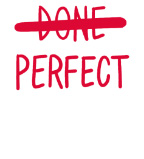
Done is better than perfect
Rapid and constant iterations and peer support are the best ways to improve your work.
Several partners of Matter Group are also members of The Value Web, whose main focus is the work with Non-Governmental Organizations and the Non-Profit Sector.
The Value Web is a global network of over 40 facilitators who are passionate about changing the way people make decisions that impact the world. Together with The Value Web, we partner with organizations and networks to design systems and structures that enable individuals and groups to learn, collaborate, engage in deep dialogue, and take informed collective action.
Being part of a global network, we focus on engaging at the intersection of systems. We make connections across networks, help orient and convene around a critical purpose, and facilitate to achieve meaningful and sustained solutions.
Together with The Value Web, we support some of the world’s most demanding multi-stakeholder engagements. We play a variety of roles in these engagements, from providing advice on formats and design to co-designing and facilitating individual sessions, to launching and maintaining communities of like-minded participants to sustain over time the sense of discovery and common purpose they developed while in our care.